
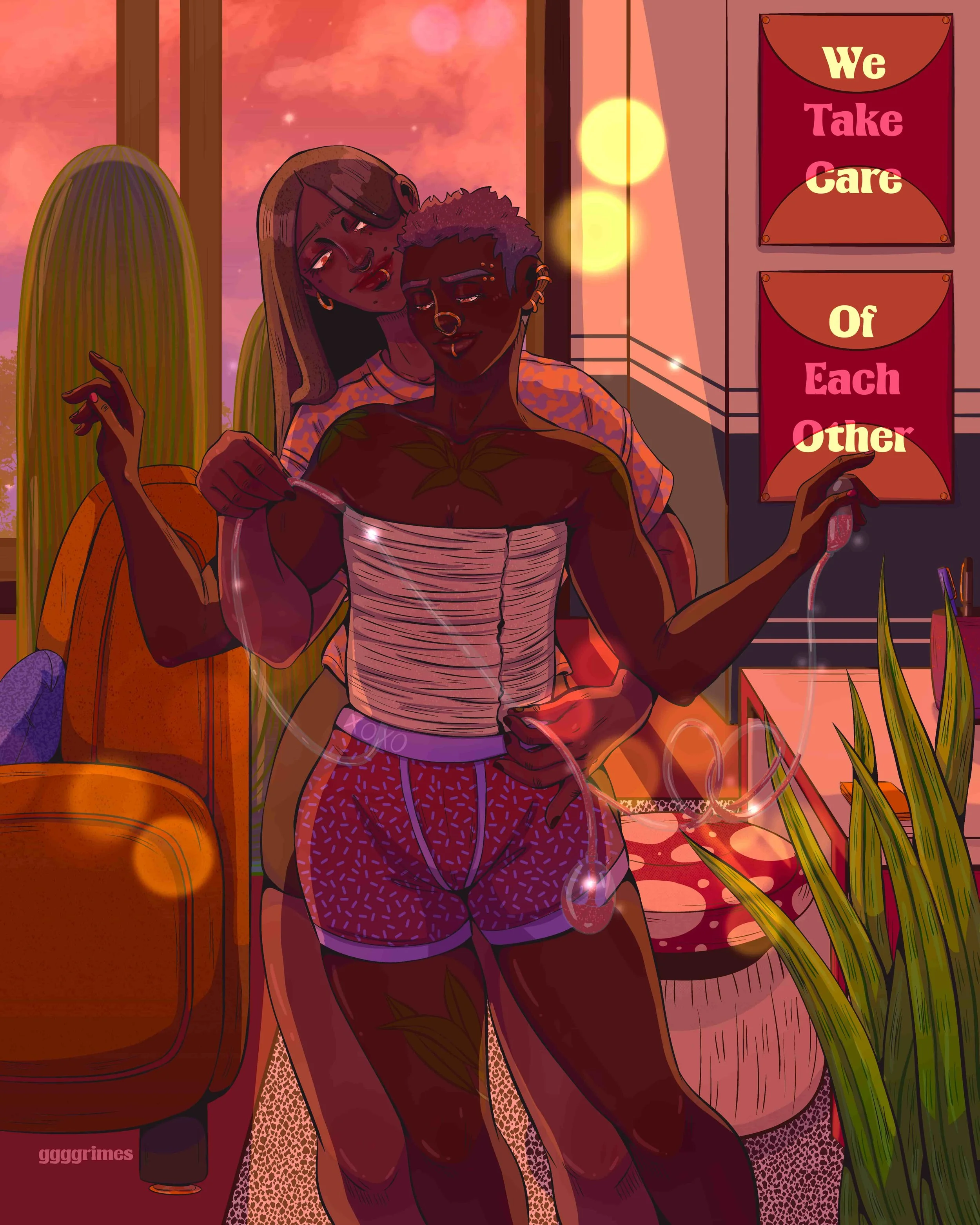
Breaking Recurring Conflict Cycles in Queer & Poly Relationships
If you keep having the same fight in slightly different outfits, you are not alone.
Many couples and polycules come to therapy feeling frustrated that they understand the issue logically but still end up in the same painful loop. Arguments repeat, tensions build faster than expected, and repair starts to feel harder over time.
At All Kinds Club Counselling, we help partners step back and map the cycle underneath the conflict. Because most relationship distress is not caused by one person being “the problem.” It is caused by patterns that take over the system.
What Recurring Conflict Cycles Can Look Like
Recurring conflict patterns often develop gradually and become highly predictable once you know what to look for. Many clients describe arguments that start small but escalate quickly, disagreements that never fully resolve, or tension that keeps resurfacing around the same core themes.
You might notice pursue-withdraw dynamics, repeated misunderstandings, scorekeeping, or conversations that feel like they loop back to the same emotional endpoint every time. In poly relationships, cycles can also involve misaligned expectations, unclear agreements, or ripple effects between multiple partners.
Many partners say, “We have talked about this a hundred times… why are we still here?” This is usually a sign that the pattern, not the content, needs attention.
Why Conflict Cycles Get Stuck
Most recurring arguments are driven by deeper emotional and nervous system patterns rather than the surface topic of the fight. When partners feel hurt, unseen, or unsafe, the body can move quickly into protective responses like pursuing, withdrawing, shutting down, or escalating.
Over time, these protective moves can become automatic. Each partner’s reaction unintentionally reinforces the other’s, creating a loop that feels bigger than either person intended.
For LGBTQ+ and polyamorous partners, these cycles can be intensified by minority stress, past attachment injuries, identity safety concerns, or the added complexity of managing multiple relationship agreements. Many highly self-aware couples feel especially frustrated because insight alone does not always interrupt the pattern.
If your arguments feel strangely predictable, your relationship system may simply be running a well-worn loop.
How Queer-Affirming Relationship
Therapy Helps Interrupt the Cycle
At All Kinds Club, we approach recurring conflict through a trauma-informed, attachment-aware, and poly-affirming lens. Our first goal is to help partners see the pattern clearly and non-blamingly.
Depending on your goals, therapy may include mapping your specific conflict cycle, identifying each partner’s protective responses, and building awareness of early escalation signals. We work on slowing down pursue-withdraw dynamics, strengthening repair attempts, and creating new interaction patterns that feel safer for everyone involved.
In poly relationships, we also support clarity around agreements, communication pathways, and emotional ripple effects across the system. Over time, many partners find that conflicts become less explosive, repair happens more quickly, and conversations feel more collaborative rather than adversarial.
The goal is not to eliminate disagreement. It is to help your relationship move from stuck cycles toward more flexible and repairable patterns.

Get Matched with a Therapist Today
Affirming therapy is just a click away.